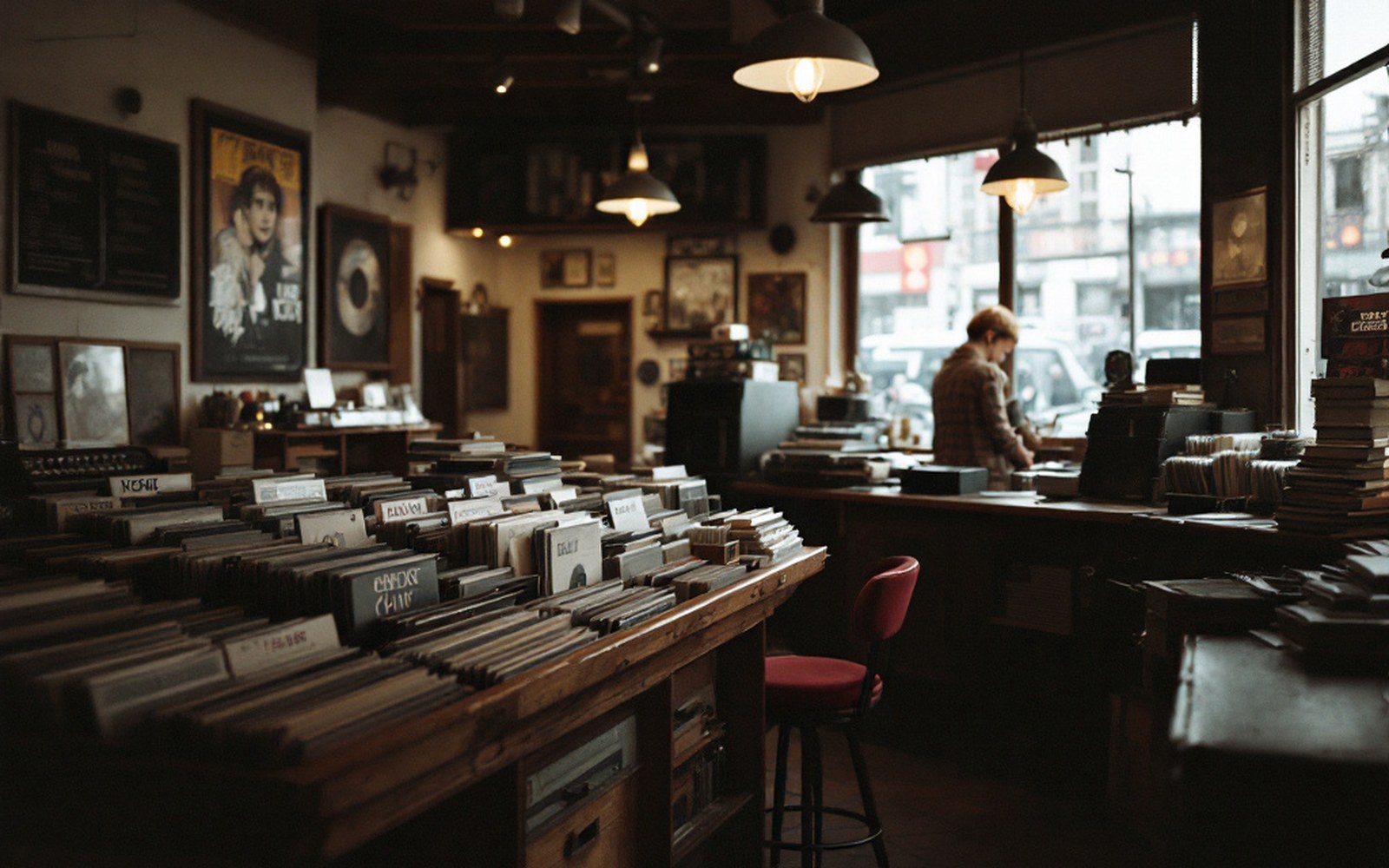
Goffin and King, upstairs at 1650 Broadway
A married pair of staff writers in a cubicle with a piano, working to a quota.
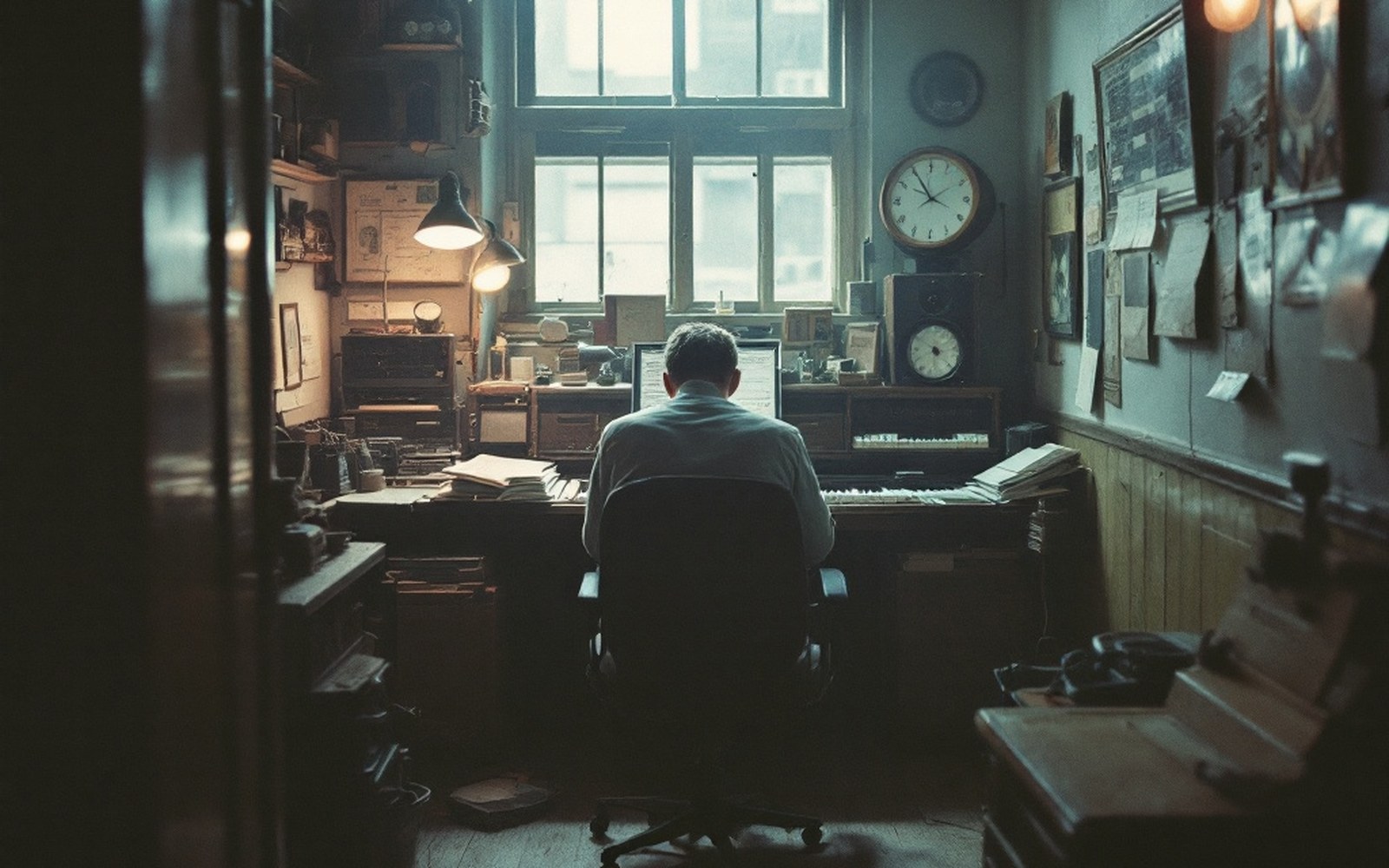
The building and the system
The address was 1650 Broadway, a few blocks north of the Brill Building proper at 1619, but the industry treated both as the same world: publishers upstairs, demo studios tucked into the floors between, and a constant traffic of songwriters carrying lead sheets down to the lobby. Aldon Music occupied space at 1650 from around 1958, and it was Don Kirshner and Al Nevins who built the shop — hiring young writers on salary, giving each team a small room with an upright piano, and expecting output measured in songs per week rather than in quality per quarter. The model was factory production applied to pop, and it worked with a precision that still looks startling from the outside.
Gerry Goffin and Carole King arrived there as a writing team shortly after they married in 1959. Goffin was twenty, King seventeen; she had already been pitching songs to labels as a teenager, and had briefly recorded for ABC-Paramount before the staff-writing arrangement at Aldon gave them a structure. Aldon's operations at 1650 Broadway ↗ placed the pair alongside Barry Mann, Cynthia Weil, Neil Sedaka, Howard Greenfield and others — a density of songwriting talent operating under a quota system that Kirshner enforced with a deliberateness that had no equivalent in the ordinary music business.
The quota was not precisely the same for every team, but the expectation was continuous output: demos cut quickly, songs submitted to publishers, and successful placement driving the next assignment. Copyright stayed with Aldon's publishing arm, Screen Gems-Columbia after the label deal was structured. The writers earned their salary and a royalty split, but the catalogue — the asset — belonged to the publisher. The mechanics of staff songwriting ↗ as Kirshner ran them were a refinement of Tin Pan Alley practice applied to the teenage market: writers were told who was recording, what tempo the producer wanted, sometimes what the subject matter should be.
Copyright stayed with Aldon's publishing arm, Screen Gems-Columbia after the label deal was structured.
The song they wrote for the Shirelles
Luther Dixon brought "Will You Love Me Tomorrow" to the group, and the song had arrived through the Aldon pipeline. Goffin and King wrote it as a deliberate pitch at the teenage-girl market — a lyric dealing with the question of physical trust, set against a melody that King shaped at the piano in their cubicle. The demo they cut in-house ran at a different tempo than what Dixon eventually recorded; it was King playing it through at a pace that felt more like a girl-group folk song than the string-draped production Dixon built around Shirley Owens's lead. What Dixon did to the arrangement — slowing it, adding strings, repositioning the drums — took the song into another register entirely, but the underlying structure held because King had built something that could bear that weight.
The record reached number one on the Billboard Hot 100 in January 1961, the first number-one single by a Black girl group in the chart's history. That result confirmed what Kirshner had always argued about the system: that a professional songwriting operation could place material with the right act and engineer a hit with a reliability no independent songwriter could match. Goffin and King didn't attend the sessions; their job was the song on paper and on demo tape. The room at 1650, the piano, the quota — those were the instruments of their trade. The session at Bell Sound or wherever Dixon tracked the record was somebody else's room entirely.
What the cubicle produced, and what it cost
The volume of work the Aldon system generated is only fully visible in the release schedule of the early 1960s. Goffin and King placed songs with the Drifters, Little Eva, Bobby Vee, Aretha Franklin, and dozens of acts across a range of labels — not by moving through the industry on charm and relationship, but by sitting in that room and writing through the week. King has described the arrangement, in documented interviews, as intensely productive and structurally constraining in equal measure. The constraint was not creative but contractual: the copyright left the room with the lead sheet.
Carole King's account of the Aldon period ↗ — documented across decades of interviews and in her memoir — makes clear that the output was real work under real pressure, not a romantic image of bohemian inspiration. Goffin supplied the lyrics; King wrote the music. The division was fairly consistent, though the collaboration could move in either direction when the deadline required it. They were, in the terminology of the business, a staff writing team, and the industry processed their output through a chain of publishers, A&R men, producers and session contractors before any of it reached a pressing plant. The group who sang the song — Shirley Owens, Doris Coley, Addie Harris, Beverly Lee — often heard a version of it only when the session was already booked.
"Will You Love Me Tomorrow" made the Shirelles famous in a way that reordered the group's commercial position, and it made Goffin and King's reputation in a way that opened the catalogue. But the song that mattered most in the short term for the Scepter roster was also part of a larger pattern: Aldon songs placed with Florence Greenberg's acts through Greenberg's relationship with Dixon, who understood what the label needed and knew where to find material that fit. The geometry of that deal — label, producer, publisher, writing team — is the geometry of the Brill Building era in miniature, and the cubicle at 1650 Broadway is where it started.
Goffin and King's marriage ended in 1968. Their writing partnership, credited on dozens of charting records, had already made the Billboard Hot 100 look like a catalogue of a single operation. That the two most important records for the Shirelles — the number one and the record that proved the group could carry a session — came out of a quota system run by a man with a stopwatch is neither ironic nor accidental. It is precisely how the Brill Building worked when it worked best.