What Dixon did to it
Luther Dixon slowed the song, added strings and put the drums where the lyric turns.

The producer who remade a demo into a record
When Gerry Goffin and Carole King finished the song that would become "Will You Love Me Tomorrow ↗," it arrived at Scepter Records as a demo — a working document, not a finished thing. The tempo was faster than what ended up on the single. The arrangement was sparse. What Florence Greenberg ↗'s label released in late 1960 bore the song's melody and words but almost nothing else from the version that came through the door. The distance between the two is Luther Dixon's work, and it is worth tracing note by note.
Dixon had arrived at Scepter as a co-owner and house producer after a period as a songwriter — he had credits on records for Perry Como and Pat Boone before he moved into the production chair. He understood the mechanics of a commercial record from both sides of the transaction: as the person who wrote the song and as the person who decided what happened to someone else's song in the studio. That double fluency shaped everything he did with the Shirelles material, and nowhere more than on the record that went to number one in January 1961.
Dixon stripped that pace out and rebuilt the song at a tempo that gave each phrase room to breathe and each syllable time to land.
Tempo as architecture
The first and most consequential decision Dixon made was to slow the song down. The Goffin-King demo had a briskness to it — the kind of pace that a writer's demo often has, because demos are demonstrations of melody and chord, not emotional weight. Dixon stripped that pace out and rebuilt the song at a tempo that gave each phrase room to breathe and each syllable time to land. The slowdown was not a subtle adjustment; it changed the character of the song entirely. What had read, in its demo form, as a fairly direct pop proposition became something with genuine ambiguity in it — a record that felt genuinely uncertain rather than merely playful about its own question.
Tempo in a pop record is rarely discussed in the same breath as arrangement or instrumentation, but it governs both. Play a song faster and the strings sound decorative; slow it to where Dixon placed this one and they carry weight. The rhythm section, too, reads differently at different speeds. A snare crack that, at a brisk tempo, functions as forward momentum becomes, at Dixon's tempo, something closer to punctuation.
The strings: an economic and musical decision
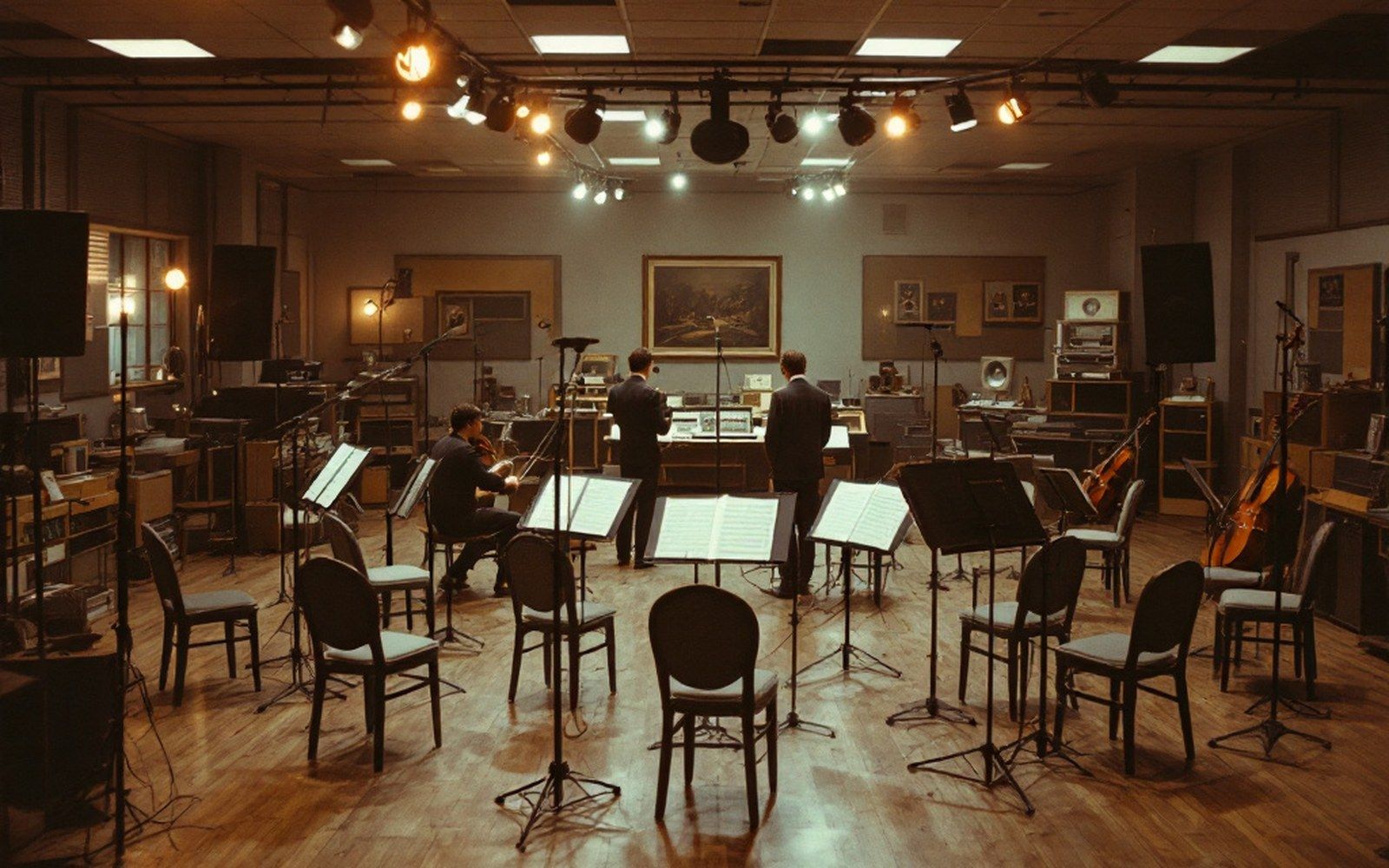
Adding strings to a teenage pop record in 1960 was not automatic. String sessions cost money — contractors, copyists, chairs filled by union musicians billing by the hour — and a label the size of Scepter had to weigh that against the uncertainty of the market. Dixon made the call, and strings on a teenage record at that moment still carried a particular signal: this is a serious record, adult in its production values, aimed at more than the immediate teenage market. The orchestration he built was not lavish by the standard of a major-label date, but it was deliberate. Strings enter the record not as decoration laid over the top but as part of the harmonic structure, filling the space that the tempo change had opened up.
The specific voicing Dixon chose for the strings matters. They sit in the midrange more than they float in the upper register, which means they do not sweeten the record so much as thicken it. The overall effect is of weight rather than prettiness — which suits a lyric that is, at its core, anxious. Goffin and King had written a song about a young woman asking a question she is not sure she wants answered. Dixon's string arrangement does not resolve the question; it holds it open.
Where he put the drums
The most discussed single element of the production is the drum part, and specifically the decision to place the snare hit at the turn in the lyric — the moment the song pivots from description to the question at its center. This is not accident and it is not formula; it is a producer listening to the architecture of a lyric and deciding that the rhythm section should mark what the words are doing.
The drummer on the session is usually reported to be Gary Chester, a New York session player. Blaine's ability to give a part exactly as much weight as the arrangement required — no more — was precisely what Dixon needed. The snare placement is deliberate: it arrives on the word that changes the tense of the song, the moment the narrator stops describing what is happening and starts asking what it means. A listener who does not consciously register the drum hit registers the shift anyway. That is the craft.
The voice in the room
Shirley Owens — later Shirley Alston Reeves — sang the lead, and Dixon's production decision around the vocal was to record it close. The proximity of the microphone to the voice gives the lead an intimacy that contrasts with the formality of the string arrangement behind it. You hear breath. You hear the slight variation between phrases. In an era when many pop productions pushed vocalists back into the arrangement, Dixon brought her forward, which means the record works simultaneously as an orchestral piece and as something deeply personal. The tension between those two things is a large part of why the record has lasted.
Doris Coley, Addie Harris and Beverly Lee provide the background vocal — their characteristic blend sitting at a deliberate distance, a cushion rather than a wall, letting the lead carry without competition.

The whole transaction
What Dixon did to the Goffin-King song was, in a strict sense, a transformation. The demo and what changed on the way to the record tells that story in detail; what matters here is the mechanism. Dixon slowed the tempo until the arrangement had room to mean something. He brought strings in at the harmonic register that would add gravity rather than decoration. He placed the drum accent where the lyric changed direction, giving the rhythm section a dramatic function rather than a merely time-keeping one. He recorded the lead vocal close enough that a teenager listening on a 45 rpm single through a transistor radio could hear another person actually wondering something.
The result was a record that programme directors at some stations found uncomfortable, which tells you that the production succeeded. The question in the lyric was real, and Dixon's production made certain it could not be mistaken for anything else.